

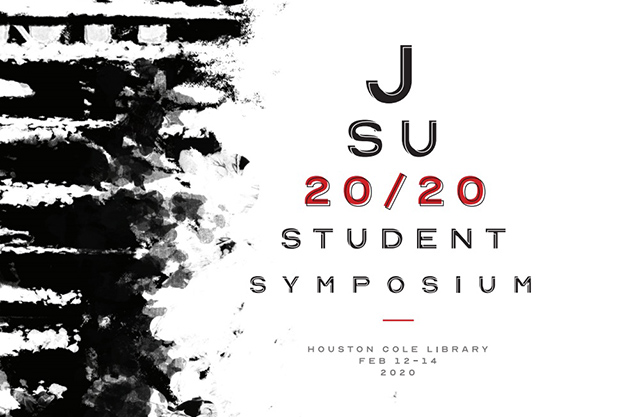
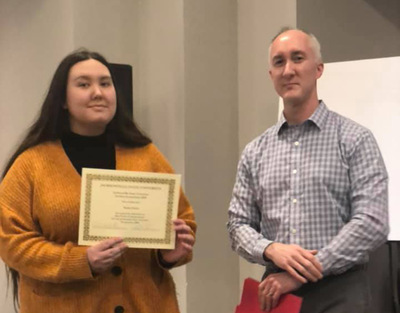
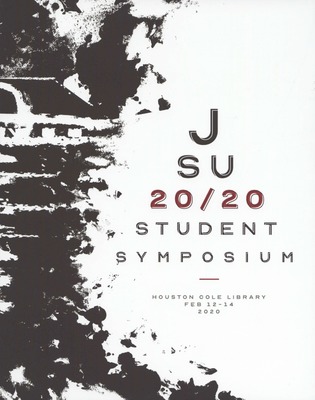
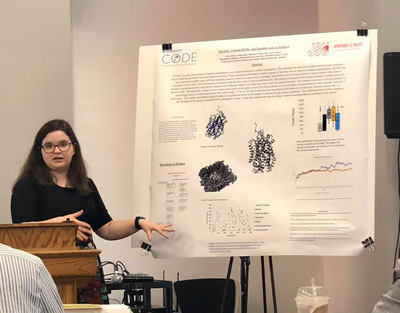
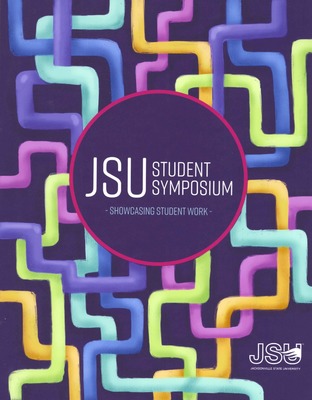
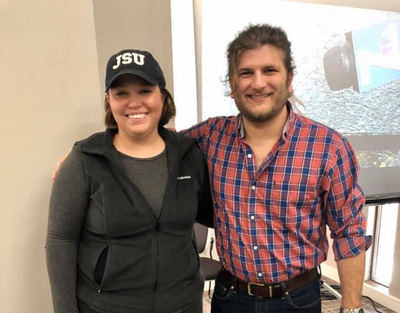
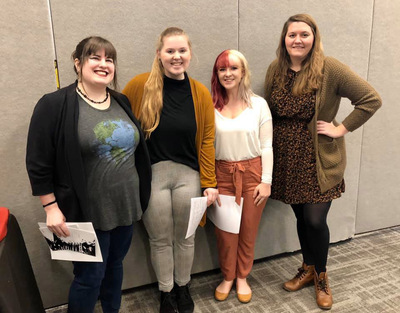
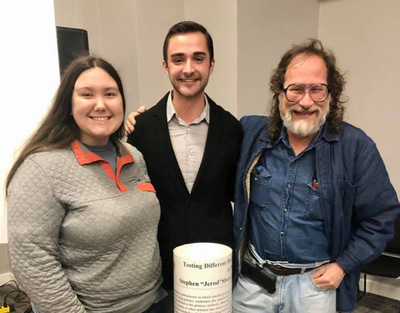
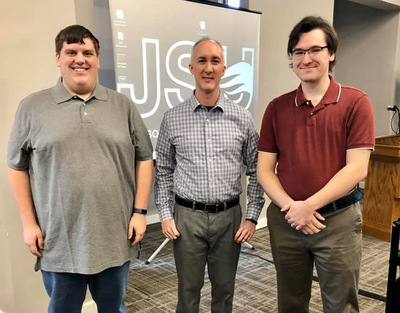
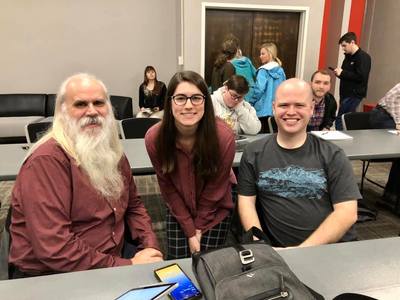
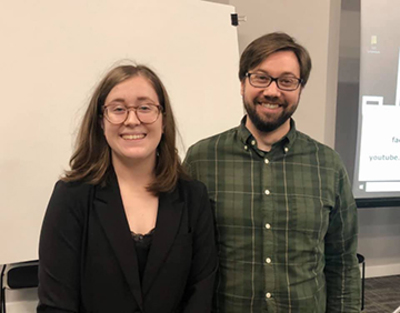
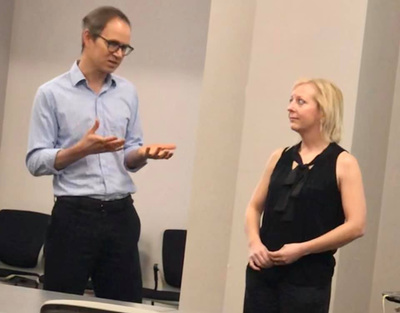
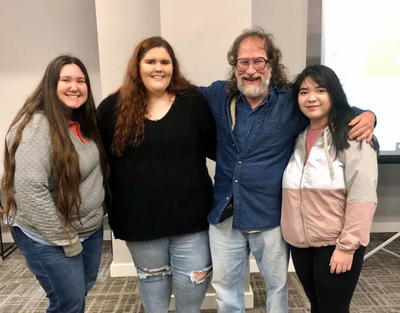
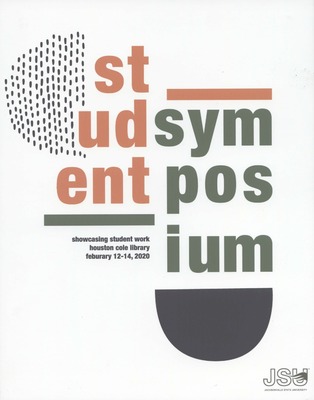
Established in 1995, the JSU Student Symposium provides a forum to publicly display and acknowledge the best work of JSU's students. More than 50 papers, posters, and projects were presented at the 2020 symposium, held 12-14 February 2020 at the Houston Cole Library; these works are archived here, along with the symposium proceedings. The following awards were presented:
- Arts & Humanities
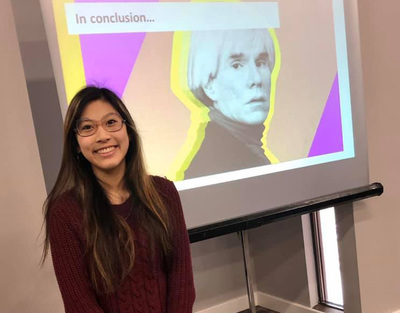
- Undergraduate: Miranda Ivey, "Andy Warhol's Influence in the American Pop Art Culture"
- Graduate: Karine Parker, "How UI/UX Principles Can Be Applied to Non-Traditional Projects in an Academic-Centered Environment" School of Human Services & Social Sciences
- Undergraduate: Kaitlyn Williams, "What's Your Type? The Comparison of the Myers-Briggs Type Indicator and the Howell Enneagram Test"
- Graduate: Brett Johnson, "Positive and Negative Aspects of the United States Social Security Program" School of Science
- Undergraduate: Caleb Hudson, "Unraveling R44P: A SLC6A1 Variant Which Includes Childhood Epilepsy"
- Graduate: Andrew Shirley, "Toxicity of Native and Invasive Apple Snail Egg Proteins on Developing Xenopus Laevis"
- Undergraduate: Olivia Sims, "A Discussion of the Guggenheims: The Links Between the Solomon R. Guggenheim Museum and the Guggenheim Museum Bilbao"
- Graduate: Alex Rocco, "Battle of the Benthic: Comparing Aggression Differences Between a Native and Invasive Species"
- Undergraduate: Shelby Harris, "The Role of SLC6A1 Variant 468 C R in Myoclonic-Atonic Epilepsy and Autism"
- Graduate: Emily Hamilton, "Generalist Practice with Individuals, Families, and Groups: Competency Implementation and Evaluation"
- Brooklee Mason
- Melanie Spaulding, "Flora of Cleburne County, Alabama"
- Claire Behan, "The Burnout of Student Athletes"
[ Best Paper ]
[ Best Poster ]
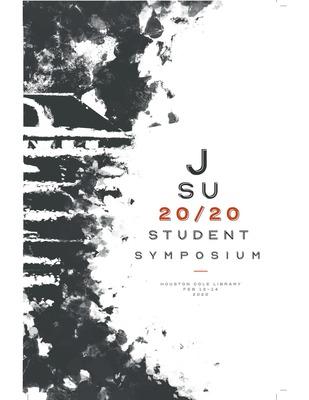
[ Best Cover Design ] (for graphic design of symposium printed program)
[ Best of Showcase ]
[ Houston Cole Library Award for Research Excellence ]
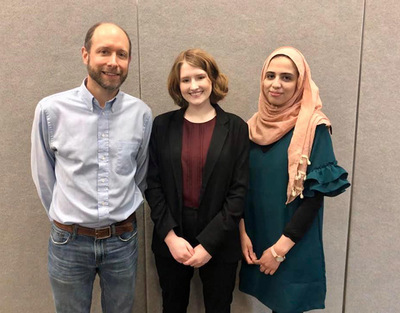
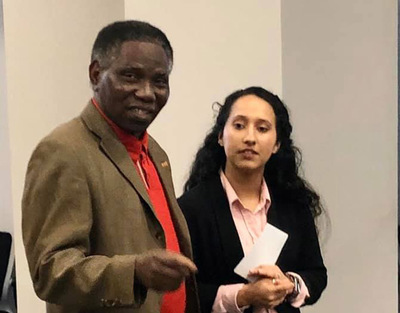
















-
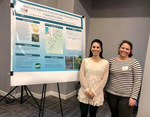
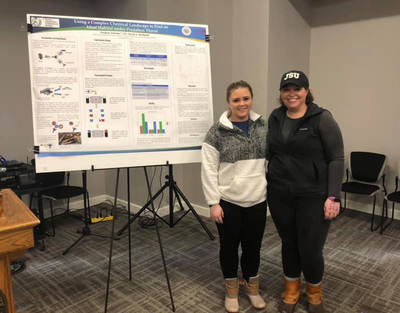
Urban Cover Impact on Freshwater Snail Distribution
Cecilia Davis
Freshwater snails have historically occurred throughout the stream systems of the Cahaba River Basin. These river systems contain the most biodiverse freshwaters in the southeastern United States. Land use and urban cover are known to severely impact snail communities within their natural environments. I surveyed 47 small-order streams along a rural-urban gradient to detect where snails are presiding within the Cahaba River Basin. The streams range in size from 0.02km² to 31.6km². The urban cover ranges of the streams begin at 1.35% and go as high as 90%. Of the 47 streams surveyed, 6 contained snails ranging in watershed sizes 0.9km² to 18km², and ranging in urban coverage from 26.9% to 82.3%. This suggests that snails can persist in watershed sizes ranging from 0.9km² to 18km² and they are able to withstand urban cover percentages up to 82.3%. These small-order streams may be running dry and becoming worsened by channel morphology change due to urban cover. Another possible explanation is the water chemistry may be under the threshold for the CaCo3 needed for snail shell growth. Future research on the topic includes comparing the morphology of similar streams in size and urban cover with one containing snails and one without to determine the effects of urban cover on stream morphology and snail communities.
-
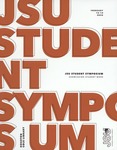
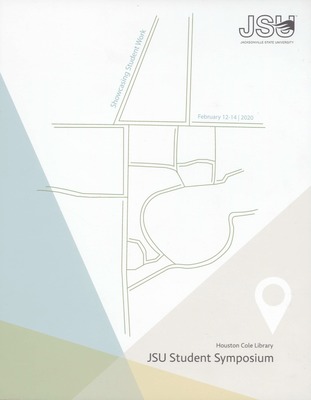
Graphic Design, Symposium Printed Program Contest, Elyona Davis
Elyona Davis
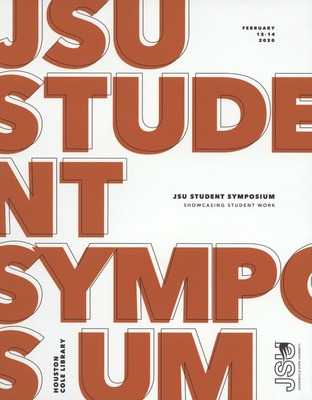
Art and Design students participated in a graphic design project contest. The winning design was used for the 2020 JSU Student Symposium printed program.
-

Graphic Design, Symposium Printed Program Contest, Shankar Dayal Dayalan
Shankar Dayal Dayalan
Art and Design students participated in a graphic design project contest. The winning design was used for the 2020 JSU Student Symposium printed program.
-

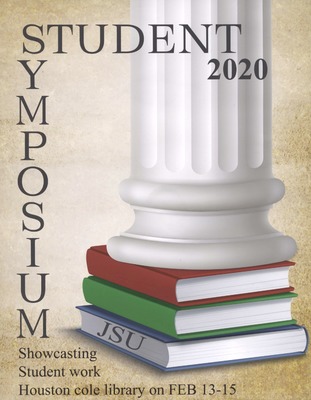
Graphic Design, Symposium Printed Program Contest, Abby Deason
Abby Deason
Art and Design students participated in a graphic design project contest. The winning design was used for the 2020 JSU Student Symposium printed program.
-

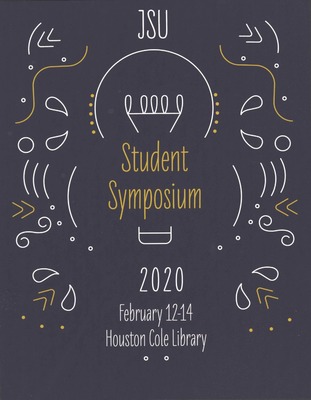
Graphic Design, Symposium Printed Program Contest, Anna Milner Guyton
Anna Milner Guyton
Art and Design students participated in a graphic design project contest. The winning design was used for the 2020 JSU Student Symposium printed program.
-
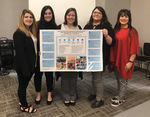
Generalist Practice With Individuals, Families, and Groups: Competency Implementation and Evaluation
Emily Hamilton, Emily Aldredge, Jane Anglea, Jessica Hullander, Faith Naumcheff, and Tiffany Works
This poster was designed as part of the assignments for the courses Generalist Practice with Individuals and Generalist Practice with Families and Groups. Presented will be the 9 competencies of social work, as laid out by the Council on Social Work Education, and the methods in which they were learned. The competencies will be addressed and linked to both personal and group experiences encountered throughout the semester as students worked towards implementation of the projects. The purpose of this poster is to present that the valuable knowledge taught and applied through classwork, research, and practical project experience was understood and comprehended.
-
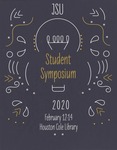
Graphic Design, Symposium Printed Program Contest, Lulu Hamissou
Lulu Hamissou
Art and Design students participated in a graphic design project contest. The winning design was used for the 2020 JSU Student Symposium printed program.
-
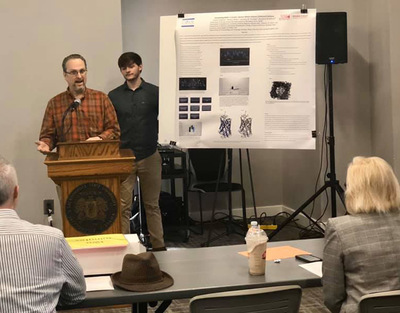
The Role of SLC6A1 Variant 468 C R in Myoclonic-Atonic Epilepsy and Autism
Shelby Harris
SLC6A1 is a gene that encodes for a GABA transporter responsible for the reuptake of GABA from the space around the synapse after neural stimulation has occurred. The rare genetic disorder SLC6A1 epileptic encephalopathy is caused by a dominant, non-inherited mutation in SLC6A1, resulting in the loss of the transporter protein function. This condition is noted by the development of seizures within the first few years along with mental retardation and behavioral issues disorders found on the autism spectrum. An analysis performed by the biotech company HudsonAlpha discovered many variations in the gene of those affected with this disorder such as the variant 468 C R which has been found in association with myoclonic-atonic epilepsy but the significance of this is currently unknown. Along with this discovery, data collected on this variant by Dr. Jeremy Prokop from Michigan State University, a comparison of the amino acid swap in #468 from Cysteine to Arginine (C to R) in a known patient exhibiting clinical symptoms was performed. Compiled metrics and statistics comparing this variant to all the known variants listed in ClinVar, TopMed and GnomAD as well as evolutionary comparison to 225 species has established a method for determining the impact of this variant as it relates to other known samples. It also has a high possible impact for motif involvement in the development of the disease. This indicates that a variation in amino acid sequence in this location is highly likely to result in deleterious effects on the patient. This protein will be modeled using YASARA software to observe the change that has happened to the protein. Using graphs and databases, I’ve shown that 468 C R is very similar to the patient variant giving more cause to the idea that this variant mostly likely causes the disorder.
-
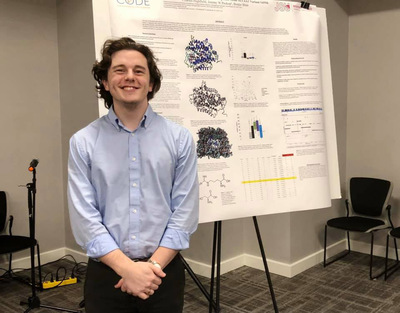
A Bioinformatic Evaluation of a Variant in GABA Transporter Gene SLC6A1 in Conjunction with a Clinical Condition Known as Stormorken Syndrome
Charles Highfield
Through information provided by ClinVar a patient exhibiting the conditions of Immunodeficiency-10, tubular aggregate myopathy, and Stormorken syndrome was selected for this project. After genomic testing the patient also showed a single nucleotide variant in the gene SLC6A1 named S459R. This variant results in a protein in which its 459 amino acid, Serene, is replaced with Arginine. Some variants of SLC6A1 are associated with an epileptic encephalopathy with intellectual disability and autosomal dominant early onset seizures. These symptoms were not reported in this patient. The variant has been classified as being of uncertain significance to the patient’s clinical symptoms. Compiled metrics through custom tools on sequence, structure, and protein dynamics (Prokop) combined with Align-GVGD, PolyPhen2, Provean, and SIFT show this variant to rank in the low to moderate functional outcome changes of SLC6A1 compared to all ClinVar, gnomAD, and TopMed variants assessed to date. The results of these comparisons indicate that there is little evidence to suggest a link between this particular variant and the development of Stormorken syndrome in the patient.
-
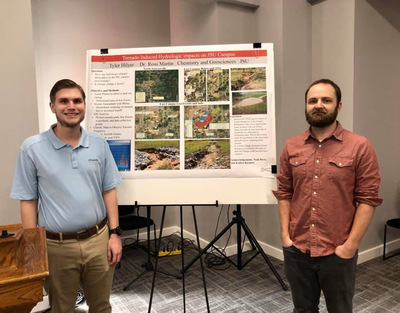
Hydrology of JSU Campus Following Tornado
Tyler Hilyer
Tornadoes have a heavy presence in the Southeastern United States and have a strong impact on not only the people but the landscape as well. Tornadoes with a rating of EF-2 or higher have the potential to destroy vegetation in their paths and even take out entire forests. When a strong or violent tornado affects an area that was once heavily forested, heavy impacts on the hydrology and geomorphology can take place. Soils that were once loose due to the vegetation now become compacted with a significant decrease in infiltration, therefore leading to increased runoff, soil erosion, and sedimentation. The surrounding community can then be faced with flooding issues, widening streams, and streams, rivers, and/or lakes polluted with excessive amounts of sediment. One the evening of March 19, 2018, an EF-3 level tornado ripped through the city of Jacksonville along with the Jacksonville State University campus, damaging many of the buildings and eliminated a lot of vegetation. This project analyses the post tornado impacts on the hydrology of a headwaters watershed that originates on the JSU campus as well as providing aerial imagery and Geographic Information Systems data of the affected watersheds. This project also analyses the potential impacts in the context of climate change and the increasing frequency of tornadoes.